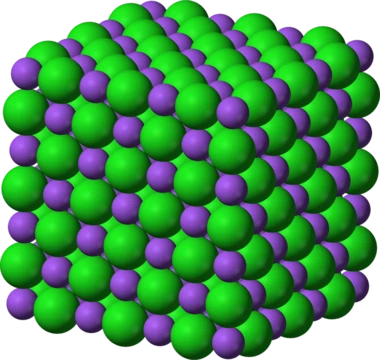
Amphibole
A group of double-chain silicate minerals forming prismatic crystals.

Amphibole is a group of inosilicate minerals that form prism or needlelike crystals composed of double chain SiO4 tetrahedra. They are a primary constituent of amphibolites and are classified by the International Mineralogical Association as a mineral supergroup, with two groups and several subgroups.
- Primary occurrence
- Igneous or metamorphic rocks, especially common in intermediate to mafic igneous rocks
Lore & Background
The name amphibole derives from Greek amphíbolos, meaning 'double entendre', implying ambiguity. René Just Haüy used the name to include tremolite, actinolite, and hornblende, in allusion to the protean variety in composition and appearance assumed by its minerals. Amphiboles crystallize into two crystal systems, monoclinic and orthorhombic, and are similar to pyroxenes in chemical composition but differ by containing essential hydroxyl or halogen and having a double chain structure. Amphiboles are minerals of either igneous or metamorphic origin. They are more common in intermediate to mafic igneous rocks, and the highest amphibole content can exceed 20% in rocks like hornblendites or amphibolites. Hornblende is widespread in igneous and metamorphic rocks, particularly in syenites and diorites. Amphiboles of metamorphic origin include those developed in limestones by contact metamorphism (tremolite) and those formed by alteration of other ferromagnesian minerals. Four amphibole minerals are commonly called asbestos: anthophyllite, riebeckite, the cummingtonite/grunerite series, and the actinolite/tremolite series. Mining, manufacture, and prolonged use of these minerals can cause serious illnesses.
Reader's Guide
Amphiboles are significant as a major rock-forming mineral group, particularly in intermediate to felsic igneous rocks and in metamorphic rocks such as amphibolites and greenschists. Their double-chain silicate structure distinguishes them from pyroxenes and influences their cleavage angles and density. The group's chemical variability allows for extensive solid solution series, such as between magnesium-rich and iron-rich endmembers, and between hornblende and tremolite-actinolite at elevated temperatures. This variability makes detailed chemical analysis necessary for species identification. Amphiboles also include the asbestos minerals, which have industrial uses but pose serious health risks. The classification as a mineral supergroup by the International Mineralogical Association reflects the complexity and diversity within the group. Their presence in rocks provides insights into the conditions of magma evolution and metamorphic processes, as amphiboles form under specific silica and water content conditions.
Did You Know?
- The name amphibole derives from Greek amphíbolos, meaning 'double entendre', implying ambiguity.
- Four amphibole minerals are commonly called asbestos: anthophyllite, riebeckite, the cummingtonite/grunerite series, and the actinolite/tremolite series.
- Pseudomorphs of amphibole after pyroxene are known as uralite.
The I-Beam Architecture of a Double-Chain Silicate
Amphibole's defining structural feature is its double chain of silica tetrahedra, a configuration that distinguishes it from the single-chain arrangement in pyroxenes. In both groups every silicon ion is surrounded by four oxygen ions, but in amphiboles certain oxygen atoms are shared between neighboring silicon centers, stitching two parallel chains together along the crystal's [001] axis. On one face of each chain, apical oxygen ions belong to a single silicon ion, and metal ions bridge these apical oxygens to lock adjacent double chains into place. The resulting architecture has been likened to an I-beam, with the two chains forming the flanges and the bridging cations serving as the web. Pairs of these I-beams are then linked by additional metal ions to complete the lattice. The structure also contains large internal gaps that may sit empty or host bulky cations such as sodium. Amphiboles crystallize in either the monoclinic or orthorhombic system and are consistently less dense than their pyroxene counterparts.
From Magma to Metamorphic Facies
Amphiboles form under both igneous and metamorphic conditions, though their distribution across rock types is far from uniform. In igneous settings they are noticeably more abundant in intermediate to felsic compositions than in mafic ones, because the higher silica and dissolved-water content of evolved magmas favors amphibole crystallization over pyroxene. Andesites carry the highest amphibole content of any igneous rock, reaching roughly twenty percent. Hornblende, the most widespread member of the group, is a common constituent of syenites and diorites and also appears in metamorphic assemblages. In metamorphic rocks, tremolite develops where limestones undergo contact metamorphism, while hornblende can form as an alteration product of pre-existing ferromagnesian minerals such as pyroxene. When amphibole replaces pyroxene in this way, the resulting pseudomorph is specifically termed uralite. Beyond individual rock types, amphiboles serve as the primary mineral constituent of amphibolites, a rock group that carries its name directly from the mineral itself. Calcium may also appear as a constituent in naturally occurring amphibole varieties.
The Asbestos Problem and the Name Behind It
Four members of the amphibole supergroup are commonly grouped under the name asbestos, a designation tied to serious health risks. These are anthophyllite, riebeckite, the cummingtonite-to-grunerite series, and the actinolite-to-tremolite series, collectively referred to as amphibole asbestos. The cummingtonite-grunerite series is widely known as amosite or brown asbestos, while riebeckite goes by the name crocidolite, or blue asbestos. Mining, manufacturing, and prolonged use of these particular amphibole species can cause serious illnesses, a risk that has made their identification and regulation a matter of considerable industrial concern. The group name itself, amphibole, derives from the Greek word meaning double entendre or ambiguity, a reference coined by René Just Haüy to capture the protean variety in composition and appearance assumed by these minerals. Haüy originally applied the term to tremolite, actinolite, and hornblende before it was extended to the entire group. The International Mineralogical Association currently classifies amphiboles as a mineral supergroup containing two groups and several subgroups, a taxonomic framework encompassing this chemically diverse family whose members display colors ranging from green, black, and colorless to white, yellow, blue, and brown.
A Puzzle of Solid Solutions and Exsolution
Few mineral groups present a more intricate compositional landscape than amphiboles. Ferrous iron substitutes freely for magnesium throughout the family, generating continuous solid-solution series between magnesium-rich and iron-rich endmembers. One well-known example runs from cummingtonite to grunerite, with the dividing line drawn at thirty percent magnesium. In the orthorhombic series, anthophyllite and gedrite differ only in aluminium content and form a continuous solid solution at elevated temperatures; upon cooling, the two end-members exsolve into extremely thin lamellae. Hornblende is the most compositionally complex member, encompassing at least five distinct solid-solution series involving magnesium, iron, sodium, and aluminium. Titanium, manganese, or chromium can further substitute for certain cations, while fluorine or chlorine may replace portions of the hydroxide. Distinguishing these chemical variants is nearly impossible through optical or X-ray methods alone; detailed electron-microprobe analysis is required. No continuous solid-solution bridge exists between calcic clinoamphiboles like hornblende and low-calcium species such as orthoamphiboles or the cummingtonite-grunerite series, with intermediate calcium compositions being almost nonexistent in nature. At elevated temperatures, however, hornblende and the tremolite-actinolite series do form a solid solution, though a miscibility gap at lower temperatures causes hornblende to develop exsolution lamellae of grunerite.
Frequently Asked Questions
What is Amphibole?
Amphibole is a supergroup of inosilicate minerals whose crystal lattice is built around double chains of silicon-oxygen tetrahedra. The International Mineralogical Association recognizes it as a mineral supergroup containing two main groups and several subgroups.
What shape do Amphibole crystals typically grow in?
Members of this group most often form prismatic or needlelike crystals, giving them a distinctly elongated, columnar habit that is easy to spot in hand specimens.
Where is Amphibole most commonly found in rocks?
It occurs primarily in igneous and metamorphic settings, with a strong affinity for intermediate to mafic igneous compositions. It also serves as a principal constituent of amphibolites.
How does the IMA classify Amphibole compared to a single mineral species?
Rather than treating it as one species, the IMA designates Amphibole as a mineral supergroup, dividing it into two groups that are further broken down into several subgroups based on chemical composition.
What structural feature sets Amphibole apart from pyroxenes and other silicates?
The key distinction is its double-chain arrangement of SiO4 tetrahedra, where two parallel single chains are linked together by shared oxygen atoms. This double-chain geometry is what gives the group its name and its characteristic prismatic crystal form.
More in Minerals & Crystals 1-24
Elsewhere in the Minerals & Crystals universe
Spotted an error? Know more?
This is a living reference — every entry is fact-audited, and reader corrections feed straight into our audit queue. Suggest an edit · See this site's audit record