Frequently Asked Questions
The most-asked questions about minerals & crystals.
What exactly is a mineral?
A mineral is a naturally occurring, inorganic solid with a definite chemical formula and an ordered internal atomic arrangement. It must form through geological processes rather than being synthesized in a lab.
How is a crystal different from a mineral?
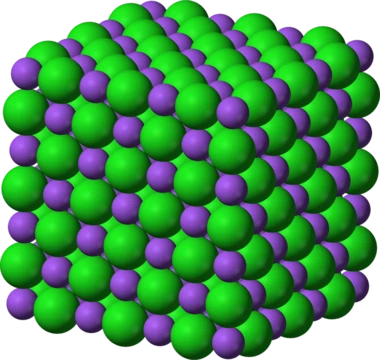
A crystal is any material whose atoms repeat in a three-dimensional lattice, while a mineral is a specific subset of crystals that also meets strict chemical and geological criteria. All minerals are crystalline, but everyday things like sugar or ice are crystals without being minerals.
What's the best way for a beginner to start exploring minerals?
Begin with the Mohs hardness scale and a handful of common specimens such as quartz, feldspar, and calcite to build a tactile baseline. A basic hand lens, an unglazed streak plate, and a reputable field guide will cover most starter-level identification work.
Who are the key figures in the history of mineralogy?
René Just Haüy is widely regarded as the father of crystallography for his 1784 geometric analysis of crystal faces, and Friedrich Mohs introduced the practical hardness scale in 1812. The 1912 X-ray diffraction work by Max von Laue and the Braggs later transformed how scientists map internal crystal structure.
What is the Mohs hardness scale and why does it matter?
It ranks ten reference minerals from 1 (talc) to 10 (diamond) based on their relative ability to scratch one another. It remains the fastest field test for narrowing down an unknown specimen and for judging how a mineral will hold up in everyday wear.
What makes a mineral qualify as a gemstone?
A gemstone is a mineral (or organic material) that has been cut and polished for jewelry, typically prized for rarity, durability, and visual appeal. Not every attractive mineral is a gem, and not every gem is a mineral—pearls and amber are organic exceptions.
Where in the world are the most celebrated mineral specimens found?
Madagascar is renowned for vivid tourmalines and blue sapphires, while Brazil supplies much of the global tourmaline and topaz trade. In the United States, Arizona's desert geodes and Mexico's Oaxaca fluorite are long-standing favorites among collectors.
Which minerals are considered the most iconic in the hobby?
Diamond, quartz, and fluorite are typically the first minerals newcomers encounter and collect. Beryl in its gem varieties—emerald, aquamarine, morganite—and the ultra-rare painite are frequently cited as fan favorites for their beauty and scarcity.
What key properties should I check when identifying a mineral in the field?
Hardness, luster, streak color, cleavage, and specific gravity are the five most reliable physical tests for a quick identification. Streak—the color of the mineral's powder on unglazed porcelain—is especially useful because it often differs from the surface color of the specimen.
What's a standout discovery moment in mineral history?
Painite was found in a small stream in Myanmar in 1957, initially mistaken for an ordinary garnet, and went nearly two decades before its rarity was fully appreciated. Its formal description and later 2005 rediscovery became a beloved origin story in the mineral-collecting community.